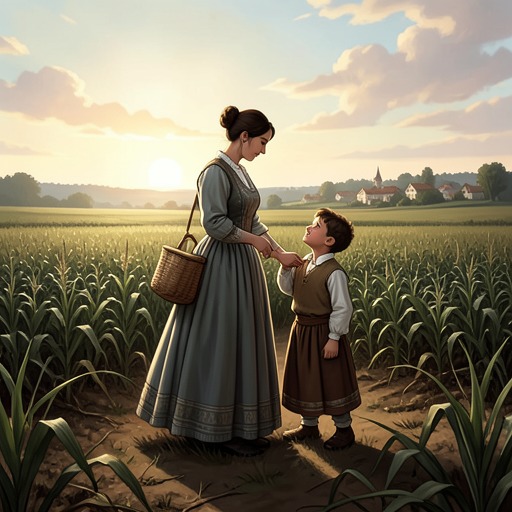
Woman as Nature
The Second SexWoman as Nature names a powerful, unstable figure in Simone de Beauvoir’s account of how men imagine women through their relation to the natural world. Woman becomes Mother, Spouse, and Idea: a source of life and material support, but also a reminder of bodily dependence, finitude, and death. The figure’s force lies in that contradiction. It expresses not an independent truth about women, but the meanings men project onto them—and helps make those meanings part of women’s social condition.
Nature as ally and threat
Man seeks in woman both Nature and a peer, but Nature itself occupies opposing roles. It sustains him and can overwhelm him; he comes from it and returns to it, while also trying to bend it to his purposes. It is at once the material condition of life and what a consciousness seeking freedom may experience as an obstacle. Woman therefore stands for both the source of being and the limits of individual sovereignty. These figures are not stable or separate: Mother, Spouse, and Idea can merge or conflict, carrying hope and failure, love and hatred, good and evil in turn.
The chapter situates this symbolism within a patriarchal distinction between active creation and passive matter. Aeschylus, Aristotle, and Hippocrates are cited as proclaiming the male principle the true creator of form, number, and movement. In that scheme, the woman’s fertility is reduced to a receptive capacity: she is earth to man’s seed, water to his fire. The imagery does not make the earth dispensable. Soil receives, shelters, and nourishes the seed, just as the maternal principle remains necessary even when male accounts claim the authority of creation for men.
This hierarchy coexists with reverence for fertility. Men continue to worship the power associated with the Great Mother, and credit Cybele with harvests, herds, prosperity, and life. Images of earth and water preserve a sense of dependence that claims of male creative primacy cannot erase. The resulting myth does not simply reject nature or celebrate it; it alternates between needing, honoring, mastering, and fearing what woman has been made to represent.
Birth, mortality, and the desire to escape the body
The maternal image also exposes a conflict between human life as embodied existence and the aspiration to transcend it. Man has been engendered, like other living things, yet may imagine himself as a fallen god who longs for pure spirit, order, and self-determination. Woman, cast as the body that binds him to birth and mortality, becomes the target of a refusal that is more fundamentally a refusal to acknowledge his own carnal condition. The womb is associated with the fact of having been born; birth, in turn, recalls the death to which embodied life is subject.
That recoil does not abolish dependence. The mother’s life-giving role and the lover’s association with desire both bring man back to flesh, the condition he seeks to deny. In the account of erotic love, he may try to possess the Other but, when possession fails, seek instead to become the other and lose himself. Love and death consequently converge in the symbolism of woman: she represents both the life that carries the species forward and the mortality that individual consciousness resists. He venerates mother and desires mistress, yet may rebel against both in fear or disgust because each recalls his bodily existence.
The association of woman with death is therefore not the myth’s final meaning. Nature’s capacity to engulf also holds out the possibility of renewal. Death can be imagined as a new birth: the dead hero returns in spring, and the sea that swallows the sun can also give it back. In this double image, maternal darkness is both the loss of a separate self and the prospect of regeneration. Woman’s symbolic power comes from holding these incompatible possibilities together, not from resolving them.
Darkness and the ambivalence of return
The threatening face of Mother Earth appears as night, Nothingness, and a force that could engulf the individual. The sea’s depths and the earth’s interior become images of opacity and materiality, set against the sky, light, and the clear heights toward which the hero aspires. Legends in which a hero falls into a cave, abyss, or hell give this fear a narrative shape: maternal darkness is figured as the place where a self may disappear.
Yet the longing to escape the self can also turn that disappearance into a desired release. Man wants to assert his separate existence and its essential difference, but he also wants to break its boundaries and mingle with water, earth, night, and the Whole. Thus woman, who signifies his finitude, also offers an imagined passage beyond it. Her equivocal magic arises from this simultaneous threat and promise: she is the one from whom man would detach himself and the medium through which he dreams of surpassing his limits.
Symbolic nature and material conditions
The philosophical figure must be distinguished from women’s actual circumstances. The book argues that woman cannot be understood as a sexed organism alone: biological facts acquire their social importance through action and through the economic organization of society. Her reproductive capacity can impose severe limits when pregnancies are numerous, childcare is unsupported, and domestic work is assigned to her; with reproductive choice and social provision for care, those burdens can be reduced and more readily reconciled with paid work. Nature symbolism cannot, by itself, explain these differences in women’s lives.
The historical-materialist account of women’s subordination links changes in tools and production to changes in social power. When primitive tools made gardening possible within women’s physical capacities, domestic work could include pottery, weaving, and cultivation and therefore contribute directly to economic life. The plow and metal tools expanded agriculture and intensified labor; alongside slavery and private property, this shift helped displace women’s productive authority and establish paternal inheritance. The book treats this account as illuminating but incomplete: tools and economic structures do not explain why difference became domination without also considering the human claim to sovereignty over the Other.
The distinction matters to the myth of Woman as Nature because symbolic representation and material arrangements reinforce one another without being identical. Woman may be treated as the embodiment of reproductive life while being denied equal standing in productive and public life. The account identifies women’s participation in large-scale production and the reduction of their confinement to domestic labor as necessary to emancipation, but rejects the idea that women can be understood only as workers. Reproduction remains consequential in both social organization and individual life, and it cannot simply be treated as another job assigned by the state.
The continuing weight of unpaid care makes the material stakes visible. The book describes childcare and housekeeping as still falling almost exclusively to women, while the antifeminist tradition in France makes men regard participation in women’s customary chores as demeaning. This unequal allocation makes it harder for women to reconcile family and working life. The wife who makes and oversees her domestic nest can experience housework as activity and as a way of giving the home personal meaning, but that activity does not free her from immanence or provide an independent affirmation of self. Woman as Nature is thus not merely an abstract set of images: it belongs to a social order in which reproductive and domestic labor are assigned and valued unequally.
The reach and limit of the figure
Woman as Nature has its greatest explanatory force as an account of a contradiction in the male imagination. Men depend on birth, fertility, and the material world, yet may treat those conditions as threats to freedom and selfhood. Women are made to carry that contradiction as symbols. The myth can account for the simultaneous idealization and denigration of the feminine, but it should not be mistaken for women’s own nature or for a sufficient explanation of their historical oppression.
The book’s argument ultimately separates emancipation from any simple triumph of machinery or economic equality. Technology can reduce the practical importance of differences in muscular strength, and work can give women a wider hold on the world; neither development alone removes domination or settles the conflict between individual freedom and reproductive responsibility. By holding myth, social labor, and bodily existence in view together, the concept reveals how an image of woman as nature can obscure both her agency and the institutions that constrain it.